Marble Sort! - Color Puzzle
- 4.7
- Rating
- 10.00M
- Installs
- Free
- Price
 Analysis by App-foxy
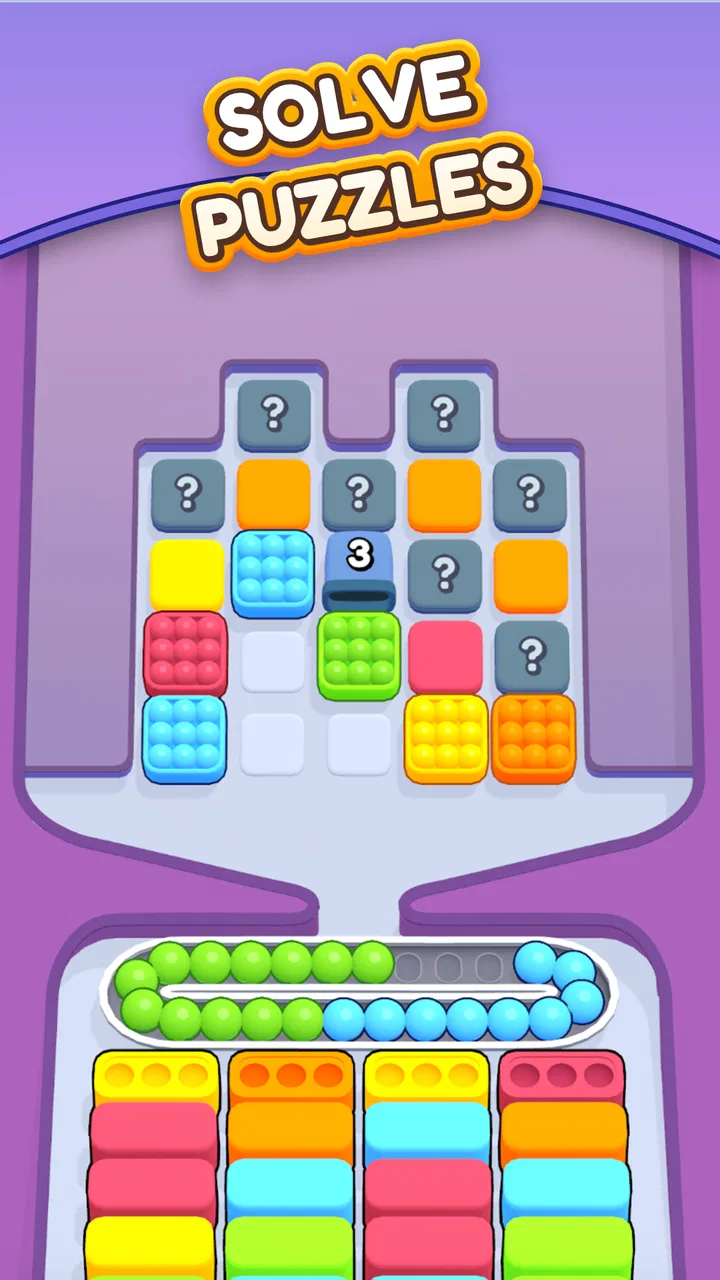
I spent time with Marble Sort - Color Puzzle as a quick-play puzzle game, and my first impression was clear: it is built around a simple action that becomes surprisingly absorbing. You drop, match, and organize colorful marbles while the physics do much of the visual work. That combination makes each move easy to understand, but not always easy to judge. A marble can look as though it will settle perfectly, then roll into a less convenient position and force me to rethink the next placement.
That balance is the reason I can see the appeal. This is not a puzzle that asks me to memorize a long rulebook or learn a complicated control system. It is a casual game from VOODOO, available for free, and rated for Everyone. At the same time, it is not completely mindless. The best results come from slowing down, reading the available space, and thinking about where a group will finish rather than where it lands first.
How the current version feels to play
The current version is 1.13.00, and the core experience is focused rather than overloaded. The game presents a clear sorting challenge, with colorful pieces and physical movement providing most of the feedback. I appreciated that the basic idea can be understood almost immediately. If you have a few spare minutes, you can start playing without first working through a tutorial-heavy introduction.
You May Also Like

 Blood Strike: 2.5 Anniversary
Blood Strike’s Loadouts Turn Every Drop Into a Tactical Gamble
A close look at Blood Strike’s custom loadouts: how fast access to signature weapons reshapes its battle royale rhythm, rewards preparation, and narrows the gap between fights.

 Pandora - Music & Podcasts
Pandora’s Music Is Easy to Start, but Harder to Recover
Pandora’s strength is its low-effort path from a seed to a station. Its weak spot is how much confidence it asks you to place in connection, setup, and quiet recovery.

 8 Ball Pool
 Is Built on Rivalries, Rematches, and Routine
A close look at the rivalries, rematches, shared routines, and unanswered safety questions that turn a quick pool match into a persistent mobile community.

 Samsung Music
’s Quiet Strength Is Playing What You Already Own
Its reach comes less from spectacle than from dependable access to a personal library. That simplicity is both the app’s strongest retention engine and its ceiling.

 AccuWeather: Weather Radar
AccuWeather Review: A Quick, Clear Forecast for Everyday Decisions
For everyday plans, the best forecast is the one you can understand quickly. AccuWeather makes rain timing, radar, and local conditions easy to act on, with a few trade-offs.

 Hill Climb Racing
Why Hill Climb Racing Still Turns Crashes Into One More Run
A tiny car, a bumpy hill and one more upgrade: Hill Climb Racing keeps resurfacing because its simple chaos makes every near-miss feel personal.
More From Our News Desk



The physics are central to the experience. A successful move is not only about choosing the correct color; it is also about anticipating momentum, gaps, and the way nearby marbles may shift. That gives the game a tactile quality that traditional color-matching puzzles often lack. In a conventional grid-based title, a piece usually behaves exactly as expected. Here, the landing position matters, and a small mistake can change the shape of the next decision.
My preferred way to play is in short sessions. I can open it while waiting for a coffee, take a few careful turns, and stop without feeling that I have abandoned a large story or missed an important event. It also works well during a commute when I want something more engaging than scrolling, although I would avoid playing while walking because the visual attention required increases once the board becomes crowded.
The game has already attracted a sizeable audience, with more than five million installs and an average rating of 4.7 from roughly forty-one thousand ratings. Those figures do not replace personal experience, but they do fit what I noticed: the concept is immediately accessible, and the physical marble movement gives the familiar sorting format a more active rhythm.
The small decisions that make sorting interesting
The most useful habit I developed was to stop treating every open space as equally valuable. A wide area may look attractive because it gives a marble room to roll, but it can also become a temporary parking zone that blocks the colors I actually need. I found it better to reserve flexible spaces for awkward pieces and use tighter areas for combinations that are already predictable.
Another practical tip is to watch the path of a marble after it lands instead of tapping again immediately. The first visible position is not always the final useful position. Waiting a moment helps me see whether the piece has settled into a group or left a gap that could cause trouble. This is especially important when several colors are close together and the physics can turn a seemingly safe move into a poor setup.
I also learned not to chase a match simply because it is available. Completing one group may feel satisfying, but it can remove a useful buffer and leave the remaining colors harder to arrange. In some situations, keeping a partial group intact gives me more control than finishing it early. That is a subtle trade-off, and it is where the game moves beyond a purely reflexive matching exercise.
Why the physical presentation matters
The marble theme is more than decoration. Rounded pieces, color clusters, and movement make the board easy to read at a glance, while the rolling behavior creates uncertainty that keeps the familiar sorting formula from becoming completely automatic. I found the visual feedback calming when the board was open and orderly, but more demanding when multiple pieces began competing for the same space.
This design also makes the game suitable for players who enjoy visual organization. If you like arranging objects, clearing clutter, or finding a clean sequence from a messy starting point, the appeal is obvious. The experience is less suitable for someone who wants exact, chess-like control over every move. The physical behavior is part of the challenge, and anyone who dislikes outcomes that depend on placement and movement may find it irritating rather than satisfying.
What the release and version details tell me
The game was released on October 27, 2025, so its current identity is still closely tied to a relatively recent launch. The version number shows that it has moved beyond its first release build, but I would not interpret that alone as proof of a major redesign. What I can say from playing the current build is that the central idea remains easy to recognize: sorting colorful marbles through a physics-based puzzle loop.
That continuity is useful for existing players. Someone who enjoyed the initial concept should not need to relearn an entirely different game simply because the app has advanced to version 1.13.00. The fundamentals remain approachable, and the game does not depend on a large collection of systems that would make a returning player feel lost.
For new players, the version information is also a reminder to judge the experience as it is now rather than relying on early impressions. Casual puzzle games can change their balance, presentation, or pacing as they develop. I would pay attention to whether future updates make later stages more varied, improve the clarity of difficult situations, or add reasons to return after the basic sorting loop has become familiar.
There is a meaningful difference between a small update that smooths the existing experience and an update that expands the game. At present, I see the strength of the product in its focused interaction rather than in a broad progression system. That is not a criticism by itself. A compact puzzle can be more enjoyable than a crowded one, but it also means long-term interest depends heavily on how well the available challenges continue to test planning.
How existing users may experience the current build
If you started playing earlier, the biggest benefit of the current version is familiarity. The controls and objective are straightforward enough that returning should feel natural. You can concentrate on improving your decisions instead of remembering a complicated set of menus. For me, that makes the game easy to revisit after several days away.
The trade-off is that familiarity can expose repetition. Once I understood the best ways to preserve open space and avoid premature matches, some situations began to feel more predictable. The physics still added variation, but the underlying goal stayed narrow. Players who enjoy polishing their technique may find that satisfying; players who need constant novelty may want a broader puzzle collection instead.
A useful returning-player routine is to treat each session as a small experiment. Rather than simply trying to clear the board as quickly as possible, I might focus on keeping one area open, building a color group from the edge, or avoiding the temptation to fill every available gap. This approach gives the same basic board more strategic texture and helps reveal whether the game continues to reward careful planning.
It is also worth remembering that free access does not mean the entire experience is free of commercial pressure. In-app purchases range from $0.99 to $99.99 per item. I would approach those options carefully and decide in advance whether I want to spend anything at all. For a short-session puzzle, setting a personal limit is sensible, particularly if the game becomes part of a daily routine.
Where it fits among familiar puzzle alternatives
Compared with a standard match-three game, this title feels less focused on creating chain reactions and more focused on placement. A match-three board usually rewards quick recognition of patterns and the search for cascading combinations. Here, I spend more time considering space, direction, and the consequences of a marble settling beside another group.
Compared with a classic sort puzzle in which colored liquids or objects are transferred between containers, the marble format feels more physical and less perfectly controlled. Container puzzles often let me predict the result of a legal move with confidence. This game asks me to account for movement and final positioning, which makes it more lively but can also make it feel less exact.
Compared with a pure physics toy, however, it has a clearer objective. I am not merely dropping objects and watching them bounce. The sorting goal gives the movement a purpose, and that purpose is what turns the visual effect into a puzzle. If you like physics games but want a stronger planning element, this is a better fit than an open-ended sandbox.
I would choose it over a large puzzle collection when I want one mechanic that I can understand quickly and improve gradually. I would choose a broader alternative when I want word puzzles, number challenges, story progression, or several modes in one app. The narrow focus is both the main attraction and the main limitation.
Who should play it and who should skip it
I think it is a good choice for casual players who enjoy organizing colors, making careful placements, and playing in brief bursts. It is also suitable for families looking for an Everyone-rated puzzle concept that can be explained without much instruction. The controls are approachable, but the later decision-making can still give experienced puzzle fans something to think about.
It may be especially useful as a low-commitment break. I can imagine opening it after finishing a task, playing until I reach a natural stopping point, and returning to work without needing to remember a story or a complex objective. That makes it a practical companion for waiting rooms, short breaks, and quiet evenings when I want light concentration rather than a demanding game.
I would skip it if I were looking for a deep campaign, competitive multiplayer, rich character development, or a large variety of puzzle types. I would also be cautious if unpredictable physical movement tends to frustrate me. The game asks me to accept that a move can be logically correct but still produce an awkward arrangement because of how the marbles settle.
Players with color-vision difficulties should consider whether the visual distinctions are comfortable for them before committing to long sessions. Sorting depends heavily on recognizing colored groups, so personal visibility matters more here than it would in a puzzle built around symbols or written labels. That is not a flaw unique to this game, but it is an important practical consideration for the format.
Three habits that improve the experience
Protect one flexible space. I try not to fill every open area immediately. Keeping a spare location gives me somewhere to place an awkward marble when the preferred color route becomes blocked.
Build from stable positions. When possible, I start with groups that are unlikely to be disturbed by later movement. This reduces the chance that a new drop will scatter a nearly complete arrangement.
Use failed moves as information. If a marble rolls away from the intended group, I treat that result as a lesson about the board’s current shape rather than repeating the same tap. The next move should respond to the new layout, not the old plan.
These habits do not turn the game into a completely different experience, but they make the sorting loop more deliberate. They also help answer an important question: is the challenge based on meaningful planning or only on luck? In my experience, placement and timing can improve the outcome considerably, although the physical behavior still means I cannot control every detail.
Remaining gaps and what I would watch next
The main gap is long-term variety. The core mechanic is pleasant, but a focused puzzle needs enough changing situations to keep returning players interested. I would like future development to preserve the clean marble interaction while making the decision-making feel less repetitive. New complications could be valuable if they deepen planning rather than simply adding visual clutter.
I would also watch how the game handles difficulty. A good progression should make me think harder without making outcomes feel arbitrary. The ideal challenge would come from tighter spatial decisions, more demanding color arrangements, or smarter use of limited room. If difficulty instead relies mainly on frustrating physics, the satisfying side of the game could disappear quickly.
Commercial design is another area I would monitor. Since optional purchases can reach $99.99 per item, I would want the free experience to remain comfortable for players who never spend money. For a casual puzzle, the best balance is one where purchases feel genuinely optional and do not interrupt the short, relaxing sessions that make the game attractive in the first place.
I would also look for improvements that help players understand why a move failed. Physics can create pleasing surprises, but clear visual feedback is important when a marble settles somewhere unexpected. If I can tell whether the problem was my placement, the available space, or the movement itself, I am more likely to try again constructively.
My final view is positive but measured. This is strongest as a polished pick-up-and-play sorting game, not as an all-purpose puzzle platform. VOODOO has a concept that is easy to grasp and enjoyable to refine, and the marble physics give it more personality than a static color arrangement. The free price and Everyone rating make it easy to try, while the current version offers a focused experience for short sessions.
I would recommend it to a friend who likes tidy visual puzzles, gentle physics, and small strategic decisions. I would not recommend it to someone who needs a story, a wide selection of modes, or total control over every piece. If you enjoy the idea of turning a crowded set of colorful marbles into an orderly result, this game is worth a look. Just approach it as a compact, repeatable puzzle and keep the in-app purchase range in mind before making it part of your daily routine.
FAQs for Marble Sort! - Color Puzzle
01What is the main objective of Marble Sort! - Color Puzzle?
The main objective of Marble Sort! - Color Puzzle is to sort marbles of different colors into their respective tubes or containers. The challenge lies in doing this with the fewest moves possible while adhering to the game's rules, which typically include limitations on how marbles can be moved.
02Is Marble Sort! - Color Puzzle suitable for all age groups?
Yes, Marble Sort! - Color Puzzle is designed to be accessible and enjoyable for all age groups. Its intuitive gameplay and colorful graphics make it appealing to both younger players and adults. However, the increasing difficulty levels can pose a fun challenge for older players who enjoy strategic puzzles.
03Does Marble Sort! - Color Puzzle require an internet connection to play?
Marble Sort! - Color Puzzle does not require an internet connection for basic gameplay, making it perfect for offline play. However, some features like leaderboards or in-app purchases might need connectivity. Always check whether your favorite features require you to be online before playing.
04Are there any in-app purchases in Marble Sort! - Color Puzzle?
Yes, Marble Sort! - Color Puzzle may offer in-app purchases. These can range from additional hints or moves to aesthetic customizations, enhancing the gaming experience. While the app can be enjoyed without spending money, these purchases can offer conveniences or extras for dedicated players.
05How does Marble Sort! - Color Puzzle handle user privacy and data?
Marble Sort! - Color Puzzle typically adheres to standard privacy practices, collecting minimal data necessary for game functionality. Always review the app's privacy policy to understand what data may be collected and how it is used. User data is generally employed to improve gameplay and user experience.
Pros
- Engaging and addictive gameplay.
- Minimalistic and colorful design.
- Smooth animations and transitions.
- Easy to learn
- challenging to master.
- No intrusive ads during play.
Cons
- Limited levels in the free version.
- In-app purchases can be pricey.
- Occasional bugs with marble movement.
- Lacks a multiplayer mode.
- Requires frequent updates.

Marble Sort! - Color Puzzle
Gallery